Articles

BIC – What’s New?

In two weeks time, applications for the first year of the British Industrial Competitiveness Scheme (BIC) should begin and then, in ten and a half weeks they will close.  So where are we and what are we still waiting for?

The consultation on the required legislation updates to enable BIC to happen closed a week ago, but the outcome has not yet been published.

The proposals would allow Exchequer funding to be channelled through the CfD supplier obligation to prevent implementation of BICS from increasing electricity bills for households and other non-exempt consumers.


“Exchequer funding received by the Low Carbon Contracts Company (LCCC) would reduce the amount that LCCC needs to recover from suppliers to fund CfD generator payments, resulting in a lower Interim Levy Rate (ILR) and lower reserve amounts than would otherwise apply. The Government intends for the first Exchequer payment to reach LCCC in time for it to be reflected in the levy from 1 April 2027, when the BICS exemption is expected to take effect. 

The Government’s minded position is that payments should be made to LCCC each quarter before the ILR is calculated. Further details will be set out by the Department for Business, Innovation, Science and Trade (DBIST) in due course. DBIST will separately publish an Impact Assessment setting out how the implementation of the BICS exemption will not lead to an increase in electricity bills for domestic consumers or non-eligible businesses.”


The changes are relatively minor and simple to the legislation, however they are crucial to the operation of the scheme in the above manner, to protect other companies from footing the bill:

Amendment of the Contracts for Difference (Electricity Supplier Obligations) Regulations 2014

  1. The Contracts for Difference (Electricity Supplier Obligations) Regulations 2014 are amended as follows.

Amendment to regulation 2 (interpretation)

  1. In regulation 2, in the definition of “SoS funds”, omit “(under section 154(2)(b) of the Act)”.

Amendment to regulation 5 (CFD quarterly contribution)

  1. In regulation 5, for the definition of “SoS repayment” substitute— “SoS repayment is the total amount of SoS funds that the CFD counterparty was required to repay during that period;”.

Amendment to regulation 7 (estimated cost, income and electricity supply)

  1. In regulation 7—
    1. in paragraph (1)—
      1. after “sum of” omit “any SoS repayment and”;
      2. after “estimates of” insert “any SoS repayment and”;
    2. in paragraph (2), before sub-paragraph (a) insert— “(za) the terms on which any SoS funds have been or are expected to be provided to the CFD counterparty;”.

Proposed legislative changes to support implementation of the British Industrial Competitiveness Scheme – GOV.UK


We know roughly how the FY2026 equivalent payment will be calculated.  However, we do not yet know when this payment will be made – the consultation and the implementation guidance both state this will be updated as soon as possible to confirm the timeline.

The one-off payment equivalent to FY2026 benefits was confirmed in the consultation on regulatory changes and scheme delivery, and we were told that:

“This payment will be proportionate in value to what businesses would have been entitled to had BICS exemptions been in operation earlier.  To ensure businesses receive support that closely mirrors this, calculations to confirm the value of payments to be received by individual businesses will use: 

  • historical estimated electricity consumption data

  • a government-set average RO, FIT and CM policy cost discount rate

  • the businesses’ banded pro-rating percentage, to ensure that payments reflect eligible electricity use.”


We know how the application process will work, and that 6 years of records for audit must be kept on all matters relevant to the application.

BIST may undertake proportionate verification activity before and after exemptions are awarded, including both targeted and random checks where appropriate.”

“Businesses must retain all records and supporting evidence relating to their application for at least 6 years and make them available to the Department on request. Records must be sufficient to demonstrate eligibility and substantiate any information provided as part of the application or ongoing exemption.

Failure to maintain or provide adequate records may result in recovery action, withdrawal of support, or other appropriate compliance measures.”

We will keep monitoring the information available as the scheme matures and if you have any questions or want to know more about BIC and how it might benefit your business, please contact us.

The UN Environment Program Overshoot Report

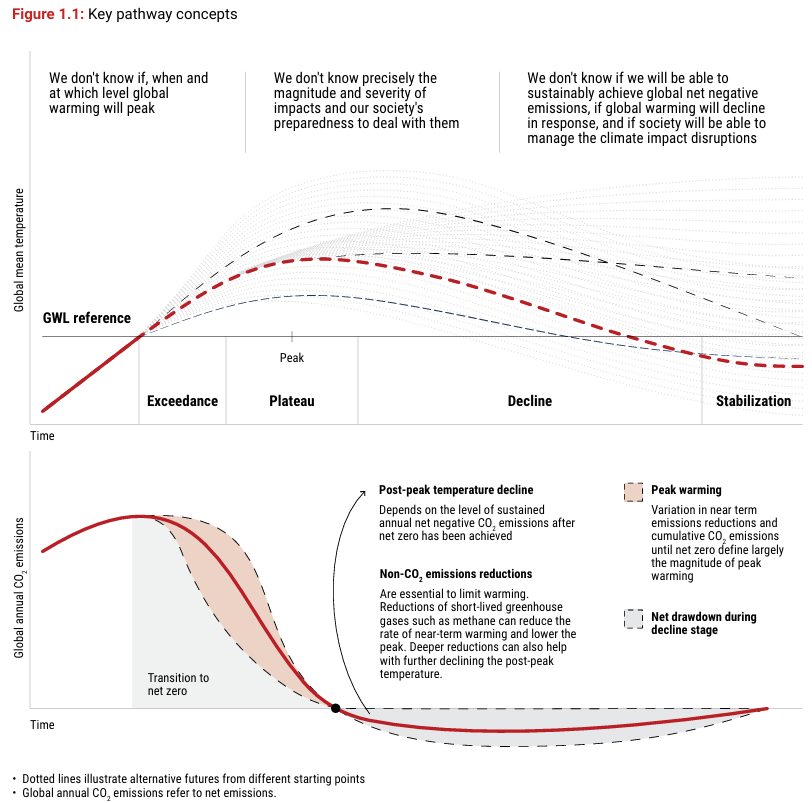
To date, the focus on Net Zero and reducing emissions has been in pursuit of meeting the legal obligations of the Paris Agreement.  Limiting warming to 1.5°C remains the foundation of international climate policy, but we have failed in this objective, we will see global warming above 1.5°C.  This report talks about the inevitable overshoot clearly, what impact it might have, and what we now need to mobilise to achieve.  Much of the below article is simply quoted directly from the report as a summary, as it needs no further contextualisation.  Please do read the original text in it’s entirety if you can: https://www.unep.org/resources/limiting-overshoot-navigating-exceedance


Well below 2°C was set as our global target for good reason.  Global warming of a degree and a half is not safe, it already comes with huge implications.

  • Some locations might become more or less uninsurable, or even uninhabitable (Vanos et al. 2023; Chen and Lin 2024; Spencer et al. 2024). High-mortality summer seasons are expected to become commonplace without adaptation (Lüthi et al. 2023).
  • The effects on agriculture will drive significant productivity losses and threaten the food security and livelihoods of billions of people (FAO 2023a; FAO and WMO 2026)
  • Climate-related changes in food availability and diet quality are estimated to increase nutrition-related diseases and the number of undernourished people, affecting at least tens of millions of people, particularly among low-income households in low- and middle-income countries in sub-Saharan Africa, South Asia and Central America (IPCC 2023a)
  • Global glacier loss is projected to continue for centuries even if global warming were stabilized at current levels, and will alone lead to 9cm of sea level rise (Zekollari et al. 2025, Rounce et al. 2023)
  • Adjustments in the hydrological cycle, atmospheric circulation and major ocean circulations such as the Atlantic Meridional Overturning Circulation (AMOC) are projected to continue for centuries well after emissions have ceased (Lacroix et al. 2024).
  • Permafrost carbon losses may be irreversible, even if permafrost areas may partially recover under global warming reversal (Cui, Ji and Chen 2025)
  • Irreversible impacts on forest and other ecosystems, such as Amazon forest loss and high-latitude woody encroachment (Munday et al. 2025)
  • Increased likelihood of crossing ecological thresholds and tipping points, such as large-scale forest die-back (Meyer and Trisos | UNEP | Limiting Overshoot 2023)

The most stringent emission reduction pathways that were available around the time of the Paris Agreement are no longer feasible.  Such pathways required immediate, deep and sustained global GHG emissions reductions to start as early as 2015 or 2020.  We now need to face the consequences of our inaction and work hard to mitigate the impacts.

The above should not be interpreted as evidence that action no longer matters. It changes the pathway: from avoiding exceedance altogether to limiting how high and how long temperatures rise above 1.5°C while preserving the possibility of returning below it.  Every fraction of a degree and every year above 1.5°C increases exposure to climate hazards and the likelihood of irreversible loss (IPCC 2022a; Schleussner et al. 2024; Reisinger et al. 2025).


Overshoot narrows options and increases risks, costs and trade-offs. It does not eliminate the ability to limit additional harm!

The most effective risk management strategy is to reduce emissions rapidly in the near term and progress towards net zero as early as possible, thereby limiting peak warming and the duration of exceedance.  Proactive adaptation is equally essential – not only to reduce harms but also to maintain capacity to sustain mitigation efforts under the increasing pressures associated with overshoot.

Rapid and sustained mitigation within this decade is both necessary and feasible across all sectors and GHGs to hold warming well below 2°C and as close to 1.5°C as possible by the end of the century.  The challenge is to act while recognizing uncertainty, rather than waiting for uncertainty to disappear.

We must reach global net-zero CO₂ emissions in the 2050s, alongside deep reductions in other gases.

We must avoid new high-carbon assets and accelerate retirement or retrofitting of existing high-emission infrastructure.  Agriculture and Waste will be key areas for Methane reduction and Carbon Dioxide Removal is crucial but becomes more difficult at higher levels of warming, further emphasising the need to act fast.


Net-Zero is now only a milestone towards Net-Negative

Halting global warming at any level below 2°C already requires reaching at least net-zero CO₂ emissions globally, along with deep reductions of other GHGs, particularly methane (IPCC 2021). Reversing global temperature would rely on mitigation efforts going beyond this, to reach sustained global net-negative CO₂ emissions alongside continued further reductions in residual non-CO₂ GHGs.

Here at Ethical Sustainability we firmly believe that we can reverse our trajectory and that UK manufacturing is a crucial part of the solution.  Come talk to us about the risks and benefits your business will be exposed to by 1.5°C warming!

Electricity Purchasing

There are two elements to consider when defining your electricity contracting plan.

  1. The form of trading, duration of contract or hedging window and purchasing strategy all impact on the commodity price achieved.
  2. The supplier chosen and options defined for billing impact your non-commodity charges.

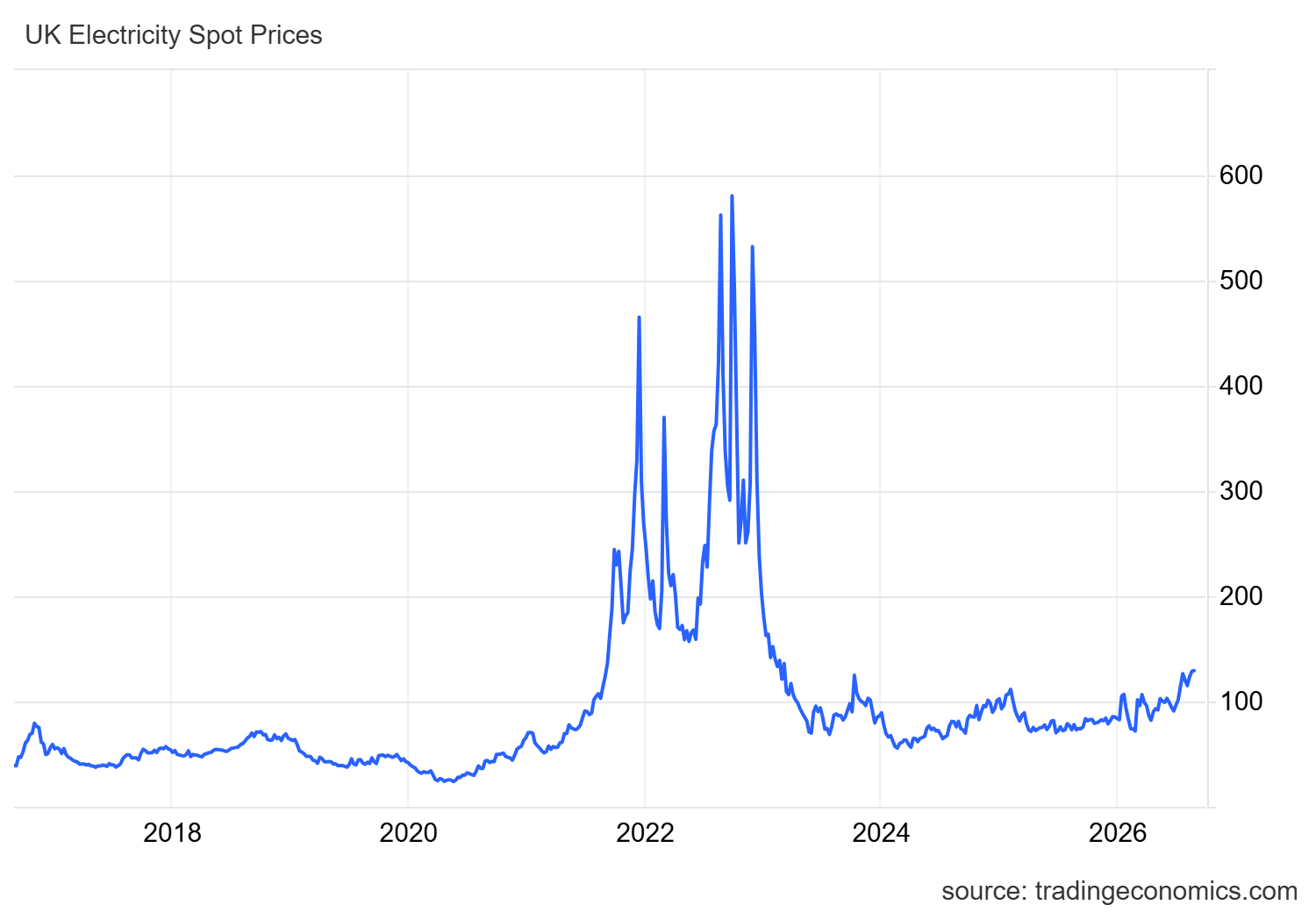
Historically a majority of manufacturers have placed fixed price contracts, for generally a short-term trading window.  Since market volatility increased these may not be the most advantageous approach to take.  A fixed price supply contract is based on suppliers assessing a suitable price on a single day of the year, then adding risk premium to cover them for potential market movement.  Many of these are placed in September for October start dates, which is typically a higher point in the market cycle – it’s very unlikely that a day in September turns out to have been the best day in the year to contract a price.

In the below graph, only 2017 and 2019 would have secured reasonable price if procured in September.  Ideally, you would have placed a long-term contract in May 2020, and extended in February 2024.  A good consultancy would have been pushing you to extend your contract horizon at those times, regardless of your purchasing method.  Contract duration should always be informed by the market and how good current pricing is!

There are a number of ways to go to market for electricity.  For small consumers, they are often stuck with fixed price, day priced contracts and can only vary duration.  Most manufacturers though, have the option to access the wholesale commodity market.  This opens up flexible contracting with a supplier – where you decide when to purchase and how much to purchase.  For some that sounds labour-intensive but you can put in place strategies and utilise a TPI to trade on your behalf based on rules you set that reflect your risk profile.  Historically many of these flexible contracts used a calendar-based trading system (a set % had to be purchased by a set date).  These worked well in a low volatility market, by averaging the cost across the year.  Now, the average is not a good price and they have typically been replaced by price and risk based trading strategies.

A footnote here to PPA procurement, which provides typically index-linked fixed pricing for a 10 year period via a complex and costly contracting arrangement.

Moving away from Commodity, the type of Non-Commodity charging is especially important for manufacturers.  With taxes and levies making up the majority of your electricity invoice, you shouldn’t just let the supplier dictate how you pay these without considering it.  Often when you go to market a supplier will suggest you fix your non-commodity charges.  It enables them and you to predict your costs simply with only your usage as a variable, and it removes a risk of rebilling for prior financial years, sounds great right?  It can be, if a charge increases it might save you from the impact of that for half a year.  But if things change dramatically, suppliers have the right to review these charges anyway, and for manufacturers there are reasons not to fix.

As large consumers you may have access to discounts on these charges, via some of the schemes we administer, and this is significantly harder to validate if your supplier has fixed your charges, or is not fully itemising them on your invoicing.  If you go to a supplier to implement Eii exemptions, and you have fixed all your charges, you have zero visibility of what they should be removing.  You also have zero way to validate that they have removed a suitable value from your costs.  For manufacturers, we recommend a pass-through style contract, and be aware that some suppliers have “pass-through” contracts which are only partially so.  You need to ask specifically for an example of the invoicing on the contract you are signing to be sure it is fully pass-through.

If you need support with your electricity contracting, our preference is to act as your advisor rather than an intermediary, but please do reach out to ask for our help!

Types of “Renewable” electricity contracts, and the risk of Greenwashing

Ethical Sustainability reporting for SECR and other disclosures is transparent and designed to be easily assure-able.  We align as far as is possible from our position with the International Ethics Standards Board for Accountants (IESBA) standards for sustainability reporting, the International Ethics Standards Board for Accountants (IESBA).  This means that when considering “renewable” electricity contracts, we want to be as careful as possible to ensure they are high quality.

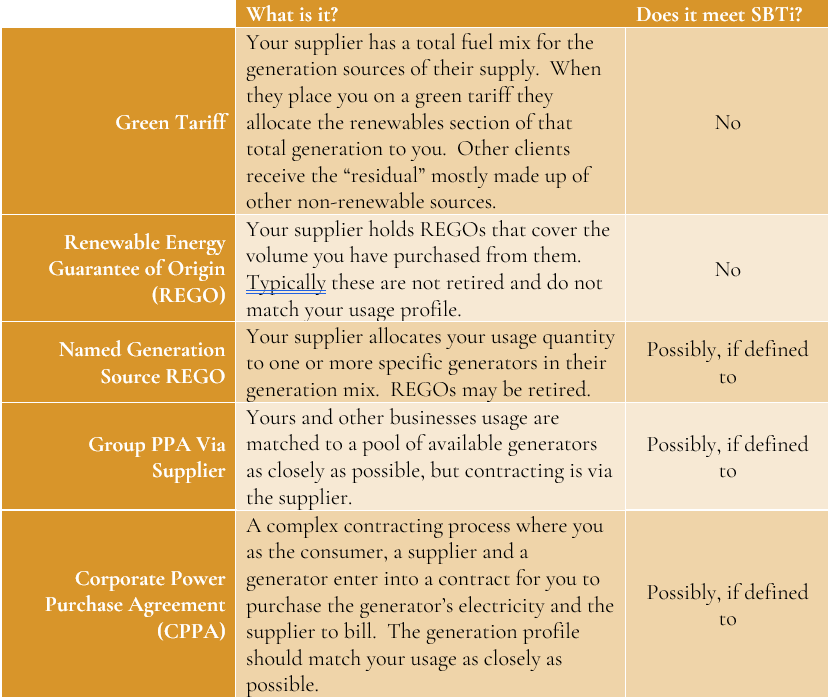
The Science-Based Targets Initiative set standards for renewable generation which can be a challenge to meet via traditional supply contracting.

“Market instruments shall be limited to LCE generators commissioned or re-powered within fifteen years preceding the period of electricity consumption to which the instrument is applied.”

https://standards.sciencebasedtargets.org/

With those of the above that can meet the requirements for reporting under SBTi, you can see that the crucial thing is to ensure that your specific contract is defined in such a way to meet them – if you go into procurement without defining those needs there is a risk that you still miss them even with an expensive CPPA agreement.

Outside of choosing whether and how to reduce the carbon footprint of your Scope 2 emissions, there are other crucial considerations too, which we address in this article ‘C’.

Eii NCC vs BIC (British Industrial Competitiveness Scheme)

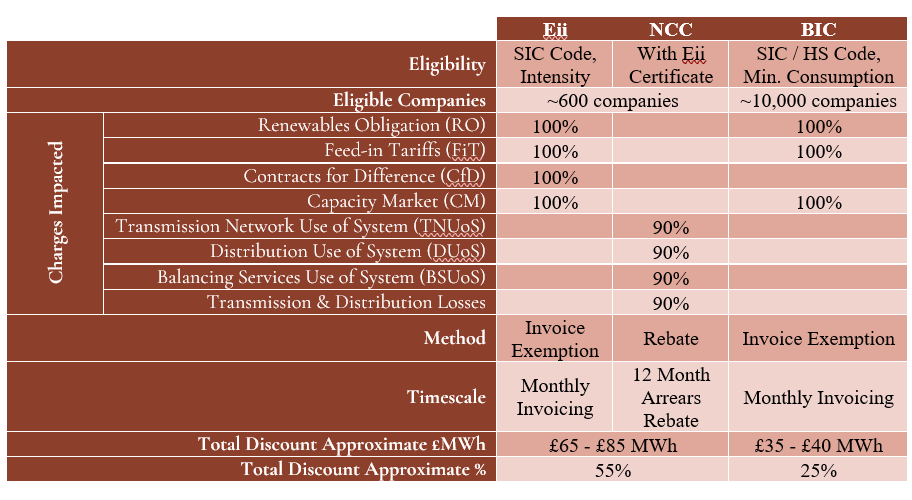
There is always excitement around a new discount scheme announcement, and you will be hearing about BIC from lots of companies right now.  This guide will give you an overview of what we expect from the scheme compared to the existing Eii with NCC scheme.

The existing Eii Exemption and British Industry Supercharger (Network Charging Compensation) Scheme is designed for the most intensive electricity consumers only, it includes a company level intensity test to prove 20% of GVA is on reference price electricity costs but provides not only exemption from renewable tariffs but also access to network charging compensation rebates.

The British Industrial Competitiveness Scheme is a new scheme targeting Frontier and Foundational manufacturers, it provides similar tariff exemptions to the Eii exemption scheme, also applied to your supply invoices, however you cannot access the NCC scheme network compensations.  In year one, it will provide an additional year of benefit as a one-off compensation payment via your electricity supplier.

Some key facts on the schemes are below:

As you can see, whilst BIC is an amazing opportunity for manufacturers who are not eligible for Eii and NCC, it is of lower value than the original scheme and eligibility for Eii should always be checked too.

MPAN Decoding – The Top Line

In our previous article we gave you some information on what MPANs are and the MPAN Core which you will use mostly when referring to your electricity supplies.  Here, we’re going to give you some more detail on what we can learn about your site from the top row of your MPAN.

The top line has historically been broken into three segments:

  • 00: a two-digit number that identifies the meter’s Profile Class, this was originally used to designate the approximate pattern of usage expected by the meter.
  • 111: the middle segment displays the Meter Time Switch Code (MTC), which tells suppliers whether the supply is single-rate, day/night (Economy 7 or 10), or seasonal time of day.
  • 222: this displays the Line Loss Factor Class (LLFC), which is used by the supplier to help calculate distribution and transmission charges.

MPANs have changed a little recently due to something called the Market-wide Half-Hourly Settlement (MHHS).  It moves all electricity meters to 30-minute settlement intervals.  The MHHS design removed the use of both Profile Classes (except for legacy non-smart meters) and MTCs.  The legacy 3-digit Meter Timeswitch Code (MTC) is replaced by the 4-digit Standard Settlement Configuration (SSC). The other fields keep their position and length; the 3-character LLFC keeps its value but is renamed the DUoS Tariff ID.

Now the top line remains broken into these new three segments, together these give the settlement class of the MPAN for billing to the supplier for the consumer’s usage:

  • 00: a two digit number that typically will read 00 as most metering is now designated HH, however 02 and 04 profile classes have been retained.
  • 1111: Standard Settlement Configuration (SSC). Non-half-hourly supplies are now being designated as HH and switched to smart metering.  NHH supplies however have four-digit codes called the Standard Settlement Configuration, which specifies the number of registers a meter has, and the times that each register is recording electricity usage.  This area of the MPAN will read 0000 for any MPANs where SSC Id is not applicable.
  • 222: DUoS Tariff Id (DUoS), this is a direct replacement of the Line Loss Factor Class, and identifies the DUoS charge category applicable for the MPAN.

So from the MPAN top line, your consultant or supplier can identify what DUoS charges you should be receiving and whether your physical meter was HH coded or time switched non half-hourly.

What is an MPAN?

A Meter Point Administration Number is a code which identifies your supply or export point.  It acts as an address for your electricity flow.  Although the name suggests that an MPAN refers to a particular meter, an MPAN can actually have several meters associated with it, or even no meters in the case of unmetered supplies.

The MPAN system was introduced in 1998 to aid creation of a competitive environment for electricity supply companies, and makes it easier for consumers to switch supplier as well as simplifying administration.  On your invoicing, it typically is presented in a layout similar to the below:

In most cases, you’ll only be working with your MPAN Core and discussing that.  The core is the final 13 digits of the MPAN, the bottom line, and uniquely identifies an exit point. It consists of:

  • a two-digit Distributor ID,
  • an eight-digit unique identifier,
  • then two digits and a single check digit.

The two-digit Distributor ID is a code which tells us which DNO or IDNO your MPAN is supplied by.  District Network Operators initially formed out of regional electricity companies’ distribution arms.  There are fourteen of these with distinct operational regions as shown on the map below.  Independent Distribution Network Operators, these operate in the same market as DNOs but are not regionally-bound in their operation.  DNOs or IDNOs are responsible for allocating MPANs to supply point locations, they create your MPAN for you.

Distribution network operator – Wikipedia

The final digit in the MPAN is the check digit, and validates the previous 12 to ensure that the MPAN is valid using a modulus 11 test. The check digit is calculated thus:

  1. Multiply the first digit by 3
  2. Multiply the second digit by the next prime number (5)
  3. Repeat this for each digit (missing 11 out on the list of prime numbers for the purposes of this algorithm)
  4. Add up all these products
  5. The check digit is modulo 11, modulo 10.

In our next article we will go into detail on what we can learn from the top row of your MPAN.

ESOS – Escaping the Cycle

ESOS has always had alternative routes to compliance, in Phase 4 we see two of these being removed, but the third strengthened.  DECs and GDAs are no longer an option for deemed compliance, but ISO 50001 is.

ISO 50001 certification can be used as an alternative route to ESOS compliance, removing the need to appoint a lead assessor if:

  1. The ISO 50001 certification covers either the total or significant energy consumption.
  2. The ISO certificate was issued on or after the start date of the compliance period (6th December 2023) and must remain valid on the compliance date (5th December 2027).

Your energy management system must be certified by one of the following:

  • a UKAS accredited certification body
  • a body accredited by an EU member state’s national accreditation body
  • a body accredited by a member of the International Accreditation Forum

If only part of your significant energy consumption is covered by your certificate then you must appoint a lead assessor and undertake energy audits to appropriately capture your SEC.

If you do comply via ISO 50001 you still have to:

  • calculate your total energy consumption and, as applicable, significant energy consumption
  • calculate energy intensity ratios
  • get a director (or equivalent) to confirm that the information required for the notification of compliance is correct
  • submit a notification of compliance through MESOS
  • keep an evidence pack

There are many benefits to ISO accreditation and the pursuit of a compliant energy management system, reducing the cost of ESOS compliance is only a small part of the picture.  If you feel your organisation might be ready then it may be too late to use it for compliance for ESOS Phase 4 but getting a gap analysis is a great first step and will bring savings for Phase 5.

ESOS Phase 4 – who’s captured and what’s changed?

It feels like yesterday the ESOS 3 Action Plans were being drafted, but here we are again preparing for the next cycle of the Energy Savings Opportunities Scheme.  So what’s new in the fourth iteration of the scheme?  Not as much as we were expecting in the end!

During consultation we were expecting this phase to operate quite differently to ESOS P3.  The government consulted on:

  • improving the quality of audits through increased standardisation of reporting requirements
  • the inclusion of a net zero element to audits
  • requiring public disclosure of high-level recommendations by participants

Most of the items were approved, with varying timelines, some to be implemented immediately for Phase 3, others to delay until Phase 4.

https://www.gov.uk/government/consultations/strengthening-the-energy-savings-opportunity-scheme-esos

Since then, we have had government changes and the outcome of the consultation has not been applied as expected.  Changes from ESOS P3 that are planned to go ahead are:

  • removal of Display Energy Certificates (DECs) and Green Deal Assessments (GDAs) as compliance routes
  • progress against action plan commitments to be included in the ESOS assessment
  • where action plan commitments have not been met, participants must provide an explanation

Due to delays in legislature the items which were previously planned to align ESOS with Net Zero and SECR have been pushed to Phase 5.  These would have been:

  • changes to refocus the scheme to cover net zero as well as energy efficiency
  • change to qualification thresholds to better align with Streamlined Energy and Carbon Reporting (SECR)

Here at Ethical Sustainability we will be operating to the newer PAS 51215-1:2025, and PAS 51215-2:2025 standards voluntarily.  Our priority remains tailoring our surveying and your recommendations to align with your business strategy and manufacturing priorities.

Jargon Buster

This article will always be pinned on our articles page, we would encourage you to bookmark it!  Our industry is full of acronyms, and our founder detests them.  So here, you can find an explanation of every acronym we use day-to-day.  We add to this whenever we realise there’s another that we haven’t got listed so it’s a long document but we hope you find it useful!

Utility Procurement

DA: Data Aggregator, after the data collector has validated it, the data is submitted to a data aggregator who profiles it into settlements, resolves any exceptions and submits it to be used to bill the supplier for the energy that consumers have used.

DC: Data Collector, responsible for remotely collecting 48 half-hourly periods of consumption data from each meter, or manually reading where remote connection is not possible.  The data collector then validates the data and if they have been unable to obtain actual data creates estimates in line with industry regulations.  They then securely submit the data to your registered supplier for billing.  The Balancing and Settlement Code mandates 99% actual data for HH meters so any meter issues should be rectified promptly.

KWh, A Kilowatt Hour.  This is a unit of power over time, the output of a kilo-watt over an hour period, which roughly equates to 3.6 megajoules.  It is the standard unit used in billing for electricity.

MOP: Meter Operator, appointed either directly or via your supplier for each meter.  MOP contracts typically run for long durations, at least 5 years and the meter operator is  responsible for installing, operating, maintaining, and managing electricity meters.  They look after the physical asset.

MPAN, Meter Point Administration Number.  A 22 digit reference number used to identify an electricity supply point.  It is comprised of 9 digits which detail information about the supply point and a 13 digit unique identifier or ‘core’.  See our dedicated article on decoding your MPAN here

MPRN, Meter Point Reference Number.  The equivalent of an MPAN for a gas distribution point.

MWh, A Megawatt Hour, 1,000 kwh or 3.6 billion joules.  Large consumers may find that professionals in the industry speak in MWh about their volume for ease.  It is unlikely that you will see other metric abbreviations but we have included them here for your reference:

Value Symbol

Name

10−6 μW⋅h microwatt-hour
10−3 mW⋅h milliwatt-hour
100 W⋅h watt-hour
103 kW⋅h kilowatt-hour
106 MW⋅h megawatt-hour
109 GW⋅h gigawatt-hour
1012 TW⋅h terawatt-hour
1015 PW⋅h petawatt-hour

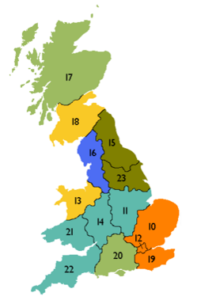
DNO, District Network Operators.  These initially formed out of regional electricity companies’ distribution arms.  There are fourteen of these with distinct operational regions as shown on the map below, and the relevant portion of the MPAN can identify the region where the meter is based for those DNO references.  DNOs are responsible for allocating MPANs to supply point locations.
Distribution network operator – Wikipedia

IDNO: Independent Distribution Network Operators, these operate in the same market as DNOs but are not regionally-bound in their operation.  Often these are found in areas of more recent additions to the network such as for housing estates.  These are also all allocated codes for inclusion in the MPAN however they do not identify the physical location of the supply point.

SSC: Standard Settlement Configuration (SSC).  Non half-hourly supplies have four-digit codes called the standard settlement configuration, which specifies the number of registers a meter has, and the times that each register is recording electricity usage, indicating the switching time.  This has now been added to the MPAN to capture the data as more meters are designated as HH profiles and smart meters are rolled out.

TPI: Third Party Intermediary.  Any company that works between a supplier and their customer, whether they call themselves a TPI, Consultancy or an arms-length government agency, if involved in helping to procure commercial energy contracts the company is a TPI.  TPIs are unregulated, though there are live proposals to change this.

Non-Commodities

BIC: The British Industrial Competitiveness Scheme.  A brand new scheme for 2027 financial year, with a back payment covering the discounts that would have been secured were the scheme active in 2026.  It exempts eligible manufacturers from the costs of Renewables Obligation (RO), Feed-in Tariffs (FIT) and the Capacity Market (CM). based on SIC code alone.

CCA: Climate Change Agreements.  These have existed since 2001 and were one of the first schemes to help manufacturers by limiting the costs of utility taxes and levies.  Companies agree to reduce energy use and carbon dioxide emissions in exchange for a reduction in CCL taxes on consumed energy.

CHPQA: The Combined Heat and Power Quality Assurance (CHPQA) Programme is designed to give exemption from the main rates of CCL tax and fuel-oil duty amongst other taxes and business rates for those operating their CHPs in an efficient way.

CPS: The Carbon Price Support Mechanism tax on fuels used in electricity generation was introduced in 2013 provide additional support to the emissions trading scheme.  The government has announced that CPS will be removed from April 2028

Eii: Energy Intensive Industries.  The Eii Exemption scheme provides relief of up to 100% of Renewables Obligation (RO), Feed-in Tariffs (FiT), Contracts for Difference (CfD) and Capacity Market (CM) charges for manufacturers who meet a 20% electrical intensity threshold.  Initially, the discount was set at 85% of these charges but as of 2024 eligible businesses are now exempt from 100% of these charges.  There is also an Eii Compensation scheme and a NI equivalent scheme which serve similar purposes but with different implementation mechanisms.

NCC: The Network Charging Compensation Scheme (NCC) also known as the Supercharger was added to the Eii scheme to provide additional relief from the charges of maintaining the network for eligible Eii businesses.  It provides relief of up to 90% of the costs of Transmission Network Use of System (TNUoS), Distribution Use of System (DUoS), Balancing Services Use of System (BSUoS) and related losses.

UKETS:  The UK Emissions Trading Scheme.  This is a successor to the EU ETS created for the UK following Brexit.  The UK ETS applies to regulated activities which result in greenhouse gas emissions, including combustion of fuels on a site where combustion units with a total rated thermal input exceeding 20MW are operated, it is mandatory.  A cap is set on the total amount of certain greenhouse gases that can be emitted by sectors covered by the scheme. Each year, operators covered by the scheme must surrender allowances to cover their emissions. The cap is reduced over time, so that total emissions must fall.  Participants receive free allowances and/or buy allowances at auction or on the secondary market

UKETS CPS Compensation Scheme: A scheme designed to compensate electricity intensive industries deemed to be exposed to a significant risk of carbon leakage due to the indirect costs of the UK ETS and the CPS mechanism.  A very limited set of companies are eligible, with only14 SIC codes covered and a threshold that indirect carbon costs amount to 5% or more of their gross value added (GVA).

Energy Efficiency

DEC: Display Energy Certificates are a mandatory for buildings occupied by a public authority where, from 9 July 2015, the total useful floor area of the building exceeds 250m2 and which is frequently visited by the public.  They rate the energy efficiency of the building from A to G based on the amount of metered energy used by the building over the last 12 months.

EPC: Energy Performance Certificates are intended to provide prospective buyers and tenants of a building with information about the energy performance of the building and practical advice on improving its performance.  It is based on the building fabric and services and is required when a building is being sold or rented and remains valid for ten years.

ESOS: Energy Savings Opportunities Scheme.  This is mandatory for large undertakings in the UK to assess the energy efficiency of their properties and identify potential improvements on a four yearly cycle.

ESOS APPR: Energy Savings Opportunities Scheme Action Plans and Progress Reports, since Phase 3 any business captured by ESOS is also required to provide an action plan following their submission, and progress reports to show what actions they have taken to improve energy efficiency.

MEES: Minimum Energy Efficiency Requirements apply to domestically rented buildings.  Landlords are required to improve properties to at least an E EPC rating unless they have a valid exemption in place.  The requirement is to spend up to £3,500 on improvements.

SEC: Significant Energy Consumption, identified assets and activities that comprise 95% of your Total Energy Consumption.

TEC: Total Energy Consumption, for ESOS you must calculate your total energy consumption over a reference period of 12 consecutive months.  This includes any energy that is both supplied to and consumed by your organisation.  Typically calculated in kWh.

TM44: TM44 is a mandatory five yearly inspection for any air conditioning system that uses a refrigerant as a cooling agent, and has an effective rated output of more than 12kW.  It outputs a comprehensive report on the efficiency of the air conditioning system and guidance on how this can be improved and is often a valuable tool in improving energy efficiency.

Carbon

SECR: Streamlined Energy & Carbon Reporting is a mandatory public disclosure of carbon emissions in place since 2019 for companies that meet two of these criteria – 250 employees, £36 Million Turnover, £18 Million Balance Sheet.

TCFD: Task Force on Climate-related Financial Disclosure (TCFD) -aligned disclosure, the UK government’s application of the TCFD recommendations.  An annual climate-related financial disclosure that must be made by certain public sector bodies and large companies.  It follows a prescriptive format and should provide information for investors on how the viability of that business may be impacted by a changing climate.  It is expected that the UK SRS will make TCFD reporting obsolete.

UK SRS: The UK Sustainability Reporting Standards are a new regulatory framework for carbon and climate disclosures which are expected to become mandatory for captured organisations in 2027.  They are based on the IFRS standards created by their International Sustainability Standards Board and align with EU disclosure plans.

© 2026 Ethical Sustainability | Designed + Built by Studio Artemisia